
I have always been interested in the history of art—not simply as something to study, but as something artists can continue to engage with. The great paintings of the past still have something to say, but what happens when we encounter them through the materials, techniques, and visual language of our own time?
That question became the starting point for my Classical Redone series.
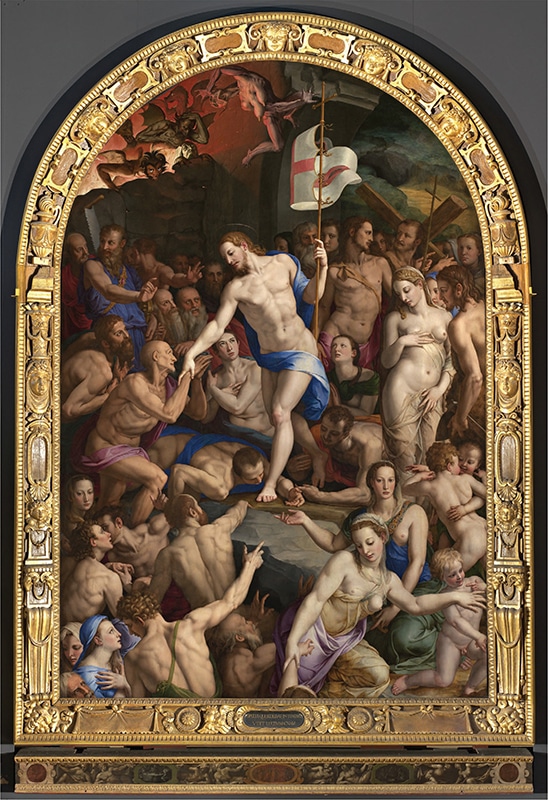
Beginning with the Familiar
For these works, I begin with paintings that have stayed with me: images by artists such as Bronzino, Michelangelo, and Correggio. I am not interested in making copies of these paintings. Instead, I use them as a point of departure.
I look at the figures, gestures, relationships, and compositional structures that make the original work compelling and ask what might happen if I take those elements apart and reconstruct them through my own process.
In that sense, I am having a conversation with the original artist across time.
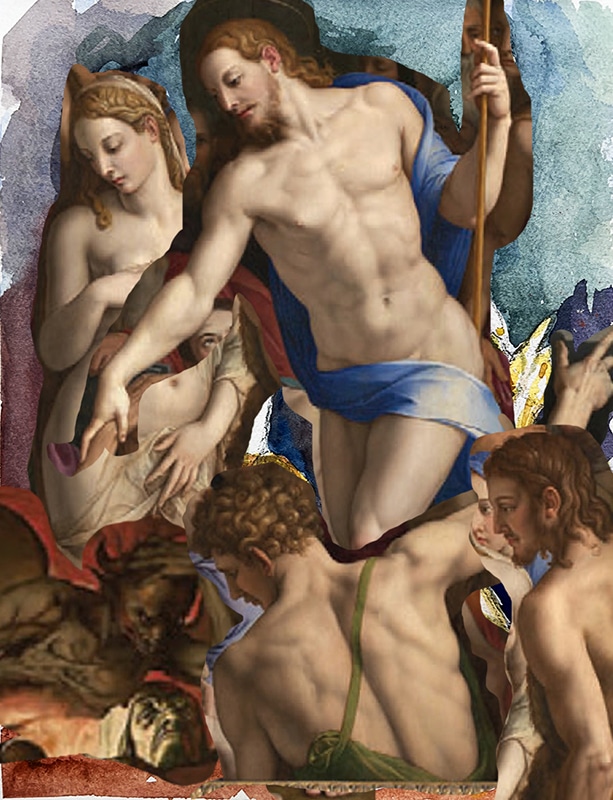
Reconstructing the Image Through Process
The process is similar to the mixed-media techniques I have been developing in my bonsai, landscape, and figurative work.
I begin with an improvisational watercolor and then I build the surface through layers of monoprinting, (applying paint with plastic and paper – I sometimes show this technique on my Instagram), adding dialing the artwork in with direct brushwork, and sometimes introducing stenciled patterns and marks.
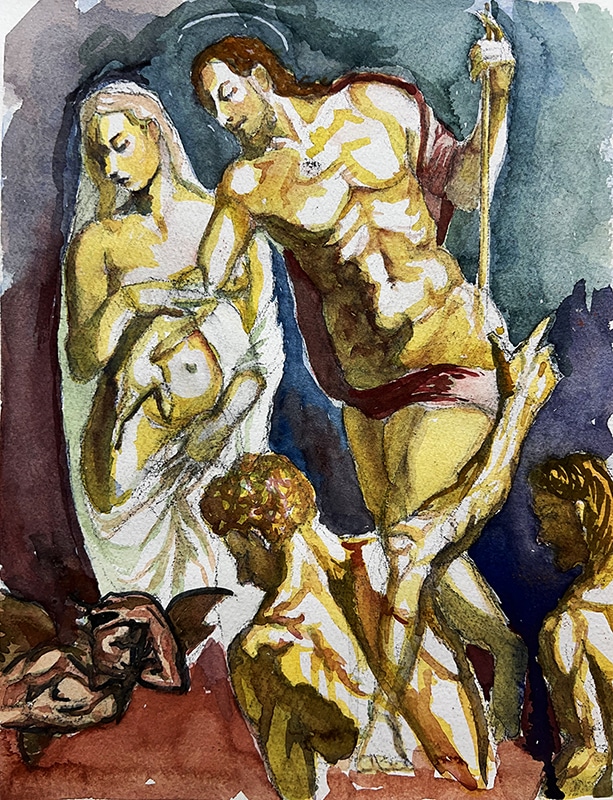
Each step changes what came before it.
Parts of the original image may remain recognizable while others become fragmented, obscured, or completely abstract. A figure might emerge clearly in one area and nearly disappear into the surface somewhere else.
That uncertainty is an important part of the process.
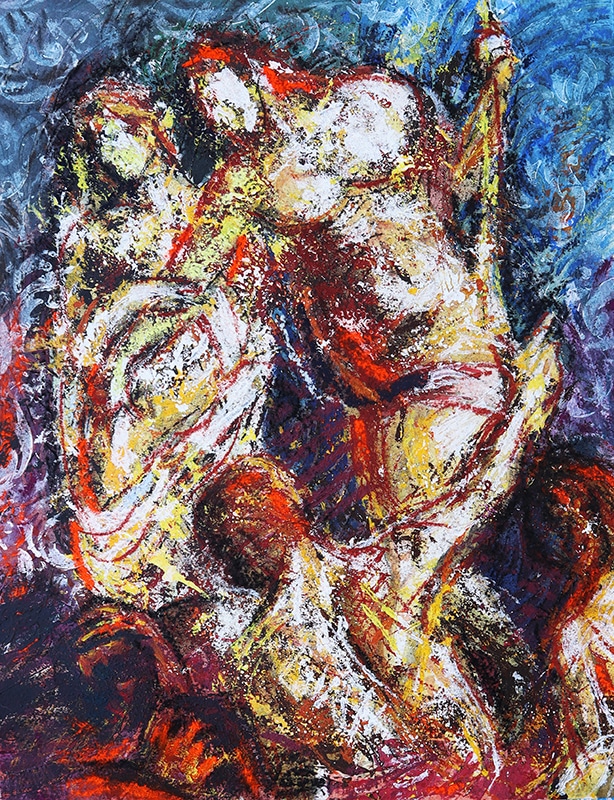
Between the Figure and the Surface
What interests me most is the abstraction between recognizable imagery and expressive mark-making.
The classical figure carries a tremendous amount of history with it. We recognize the human body, gesture, movement, and relationships between figures. But as I work across the surface, those forms begin competing with texture, color, pattern, and expressive marks.
At times the figure dominates. At other times the surface takes over.
I find that back-and-forth compelling because the painting is no longer simply an image of something. The physical process of making the painting becomes part of what we experience.
Looking at the Past Differently
Reappropriating these historical paintings allows me to encounter familiar works in a different way.
When I redraw, transfer, obscure, reconstruct, and sometimes partially destroy an image, I begin noticing things I might otherwise overlook—the turn of a body, the rhythm between figures, the weight of a gesture, or the underlying structure holding a complicated composition together.
The original artwork provides the source, but the process changes my relationship with it.
Ultimately, Classical Redone is not about recreating the past. It is about using the past as material for exploration.
These paintings allow me to bring together two things that have always been important in my work: the long history of figurative art and my continuing exploration of what can happen when process, accident, and technique are allowed to transform an image.
The classical painting may be where each work begins, but I never completely know where it will end.
Stay Connected
Thank you for following along with the Classical Redone Series. Sharing how these pieces develop—from the original classical inspiration through watercolor, pastels and painting is an important part of my studio practice.
If you’d like to see what I’m working on next, follow along, ask questions, or simply stay connected, you can find me here:
https://www.instagram.com/reekersfig
https://www.facebook.com/reekersart
https://www.patreon.com/c/ronreekers
I always enjoy hearing from people who connect with the artwork or the process, so please feel free to leave a comment or reach out. And if you’d like to support the continued development of my artwork and videos, you can join me on Patreon, where I share early announcements and additional studio updates.
I particularly like “people who connect with the artwork or the process” here. It speaks equally to fellow artists, bonsai enthusiasts, and potential collectors—which is exactly the audience this series is beginning to bring together.